Today on Celebrate the Bible:
LISTEN NOW (6 Minutes):
The Library of Congress Gutenberg Bible Facsimile
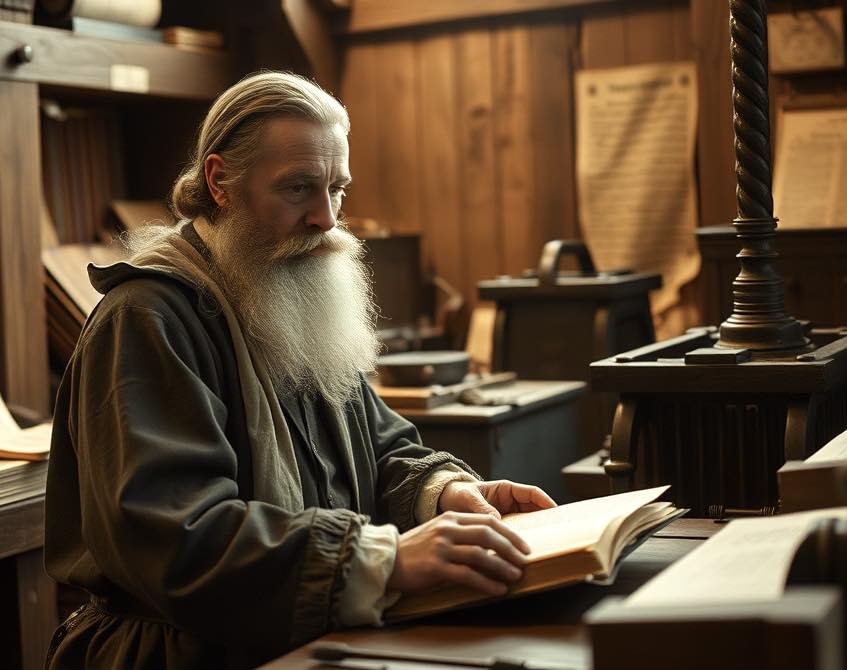
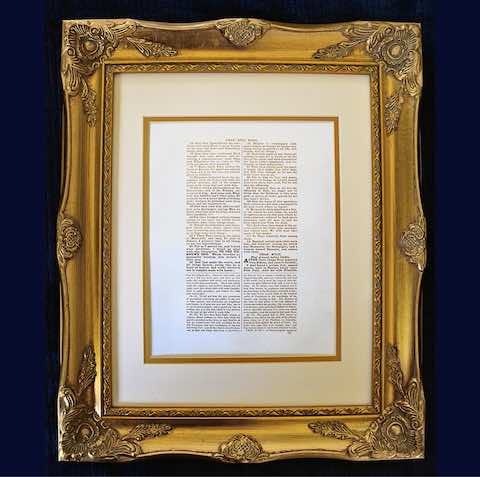
Our item for this episode is a Gutenberg Bible facsimile title page from the book of Genesis. This is the first book of Moses in the Christian Holy Bible. It was produced and offered by the United States Library of Congress back in the 1960’s. The Bible that it was taken from is held in their collection.
With a facsimile, every effort is made to make it as close to original as possible. Many times the ink will be sampled, and the chemical composition will be duplicated. The paper in a facsimile is custom-made. It is designed to closely match the production of the original paper. So, in essence, a facsimile is as close to the original as one can get.
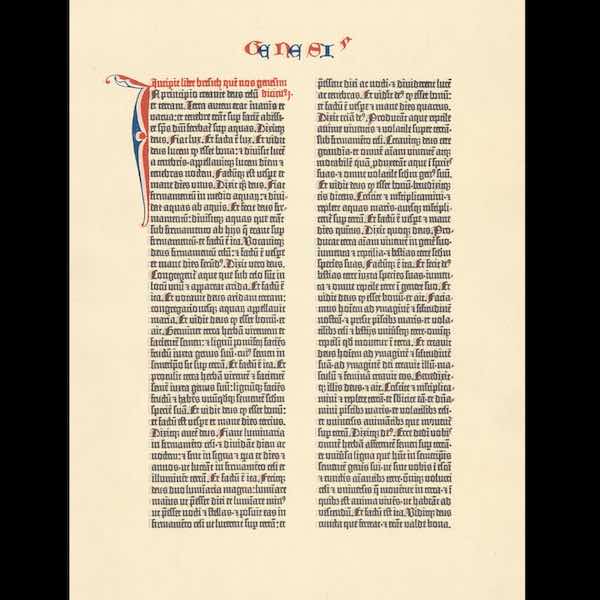
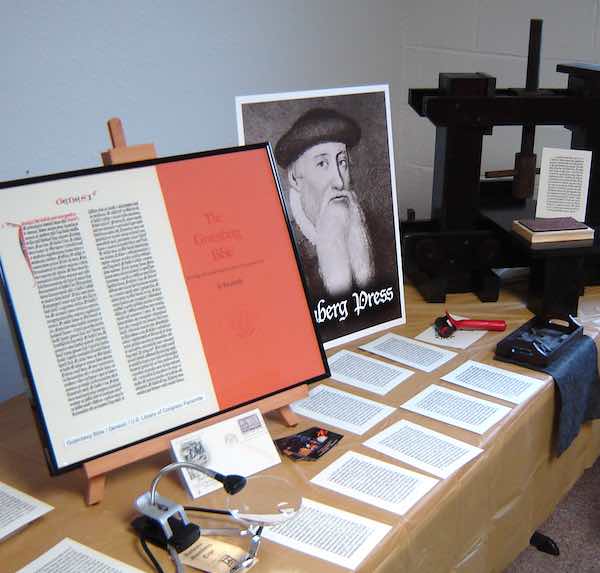
If you are listening to this as a podcast, please visit celebratethebible250.com to view the photos included with this episode. Type Gutenberg into the search box, and the matching article should come up.
If this would be an original page printed by Gutenberg himself, it would be worth several hundred thousand U.S. dollars — depending on the page and its condition. I mention this because the title page from Genesis is, typically, the most expensive collector’s page. It is the most sought-after leaf of any bible.
Neither individual leaves or whole Bibles become available at auctions very often. As for whole Bibles, only around 40 or so are believed to be in existence. Today they would be worth in the millions of U.S. dollars.
This Library of Congress facsimile page of Genesis is actually very rare on its own.

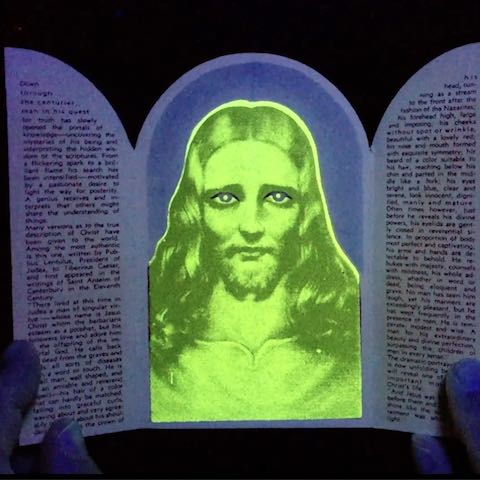
To learn about the history of the Gutenberg Bible, I’ll start off by reading excerpts. These excerpts are written in the interior of the presentation folder of this page. This way, you will learn the history directly from the Library of Congress of the United States.
As follows:
“The Gutenberg Bible was the first great book printed in the Western World. It is commonly attributed to Johann Gutenberg, and was printed in Mainz, Germany, between 1450 and 1456. There is some doubt that Gutenberg saw the finished product come off the press, but to him and his associates, assuredly, belongs the credit for inventing the process of making “movable” or interchangeable metal type, and for solving the many other problems of finding the right materials and methods for printing a complete book.

The production of the Gutenberg Bible ranks as one of the landmarks in the history of civilization. Previously, the record of man’s culture and achievements was preserved in manuscripts, laboriously written by hand, and largely inaccessible to most of the people. Gutenberg’s invention made it possible for much of the accumulated knowledge of the human race to become the common property of every person who knew how to read — a great forward step in the emancipation of the human mind.”
And here are a few extra items of interest, taken from the Library of Congress catalog listing:
“The Gutenberg Bible is the first great book printed in Western Europe from movable metal type. It is therefore a monument that marks a turning point in the art of bookmaking and, consequently, in the transition from the Middle Ages to the modern world.

This Bible, with its noble Gothic type richly impressed on the page, is recognized as a masterpiece of fine printing and craftsmanship, and is all the more remarkable because it was undoubtedly one of the very first books to emerge from the press.
The text of the Gutenberg Bible is the Latin translation known as the “Vulgate,” which was made by St. Jerome in the fourth century. The capital letters and headings are ornamented by hand in color.”

In closing, I would like to read, in English, the opening lines of the Book of Genesis:
In the beginning God created the heaven and the earth.
And the earth was without form, and void; and darkness was upon the face of the deep. And the Spirit of God moved upon the face of the waters.
And God said, Let there be light: and there was light.
And God saw the light, that it was good: and God divided the light from the darkness.
And God called the light Day, and the darkness he called Night. And the evening and the morning were the first day.
So, until we meet again, and for Celebrate the Bible 250 this is Francis Douglas. If you’re interested in learning more about the History of the Christian Holy Bible in America, please like, share and subscribe:

 America 250 Semiquincentennial Bible Celebration