LISTEN NOW (6 minutes):
PODCAST TRANSCRIPT:
Today on Celebrate the Bible.
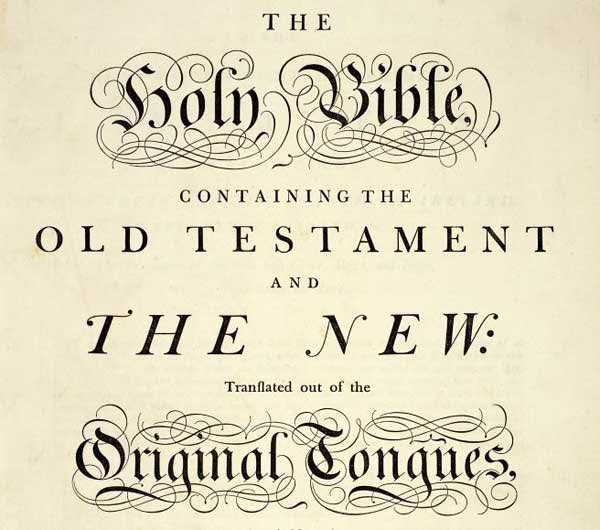
Some Bibles are considered beautiful, not from their illustrations and adornments, but from their typography and printing.
The Baskerville Bible is just such a Bible.
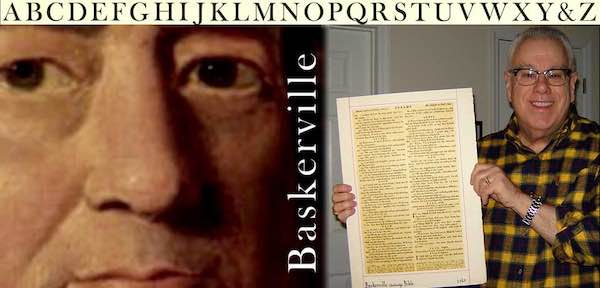
The Baskerville Bible was printed at Cambridge, England, in 1763. John Baskerville, born on January 28, 1706, was best known as an English type-founder and printer.
I am including it in my Celebrate the Bible / America 250 Semiquincentennial programming, due to its association with one of America’s founding fathers. This association is with Benjamin Franklin (as we’ll see below).
This Bible is noted as one of the four typographical monumental Bibles printed throughout history. The others are the Gutenberg Bible, The Doves Press Bible, and the Rogers Oxford Lectern Bible.
Up until this point in time, in the eighteenth century — that’s the 1700’s — most Bibles were considered “beautiful” due to the quality, and or complexity, of their woodcuts, engravings, and etchings.
This Bible was judged differently from the others. Its beauty was determined by its typography. This included smoother, whiter paper. It also encompassed innovations in printing production, including ink formulation.
The design of a typeface can enhance any message that needs to be conveyed. Isn’t it interesting that the typeface used on a circus poster LOOKS like it should be announcing a circus? Or, the typeface for a western-style steak house appears as if it hails from the wild, wild west?
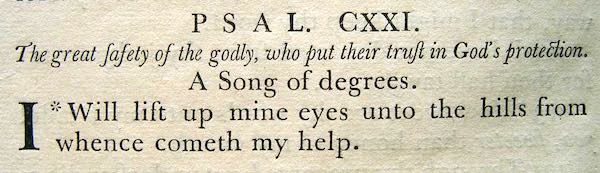
With that in mind, is it possible to create a Biblical typeface that reminds one of the Holy Word of God?
Let’s turn to John Baskerville himself, to hear his thoughts on designing typefaces.
As follows: “Amongst the several mechanical arts that have engaged my attention, there is no one I have pursued with so much steadiness and pleasure as that of letter-founding. Having been an early admirer of the beauty of letters, I became insensibly desirous of contributing to the perfection of them. I formed to my self ideas of greater accuracy than had yet appeared, and have endeavored to produce a set of types according to what I conceived to be their true proportion.“
If you look on the web page associated with this podcast, you’ll find a few photos of this extraordinary Bible. You can find that page at celebratethebible250.com.
This Bible is not what would be considered a very common Bible, as it was issued in only 1,250 copies. Remember, that back in “those days,” each page of a book had to be hand-pulled. This was done on a large, wooden press. It was VERY hard work!
Back then, 1,250 copies was a large production run.
Today, that number would be over one million copies.
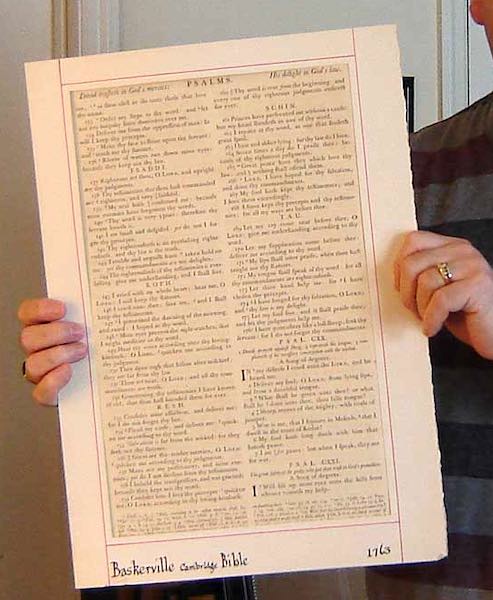
Now, the Baskerville Bible did not please everyone. Some thought his typeface designs had too much contrast. They believed the thick and thin strokes of each letterform were excessively sharp. And, caused extra eye strain for some readers.
Benjamin Franklin, one of America’s founding fathers, a Philadelphia printer, and bookstore owner, became friends with Baskerville. He would visit him during his travels to England. And, carried his Bible in his Market Street, Philadelphia, book store.
Franklin, as a printer, defended the typeface. He asked one of the complainants to re-read a page from John Baskerville. Upon completing the task, the complainant stated that his eyes hurt. Franklin then informed him that he was not even reading a Baskerville page at all! It was a typeface of yet another type designer, William Caslon.
The prejudice heaped upon Baskerville’s type design seemed to be more related to a bias against the man himself. It was less about his typeface.
Upon writing to Baskerville with this complimentary information, Baskerville was quick to publish Franklin’s remarks — as an endorsement!
As for William Caslon, his first typeface just so happens to have been designed for the Society for Promoting Christianity. It’s also interesting to note that the first printed version of the 1776 Declaration of Independence used Caslon type.
And that’s all I have for the Baskerville Bible this time around. As a collector, lecturer and exhibitor, I enjoy sharing these findings with you.
Have a look around the web site to see other pieces of American Bible history.
Share with and tell your friends about it, too.
So, until we meet again, and for celebratethebible250, this is Francis Douglas.
If you would like me to give a presentation at your church, school, gallery, or organization, please let me know. My contact information is below.
The topic I cover is the History of the Christian Holy Bible in America.
Your group will not only learn about it. They will also see, on display, pages from the most significant Bibles in American history.
I will be available for Southern New Jersey, Southeastern Pennsylvania, and Northern Delaware.
CONTACT (for presentation inquiries only please):
Available for Southern New Jersey, Southeastern Pennsylvania, and Northern Delaware.



 America 250 Semiquincentennial Bible Celebration